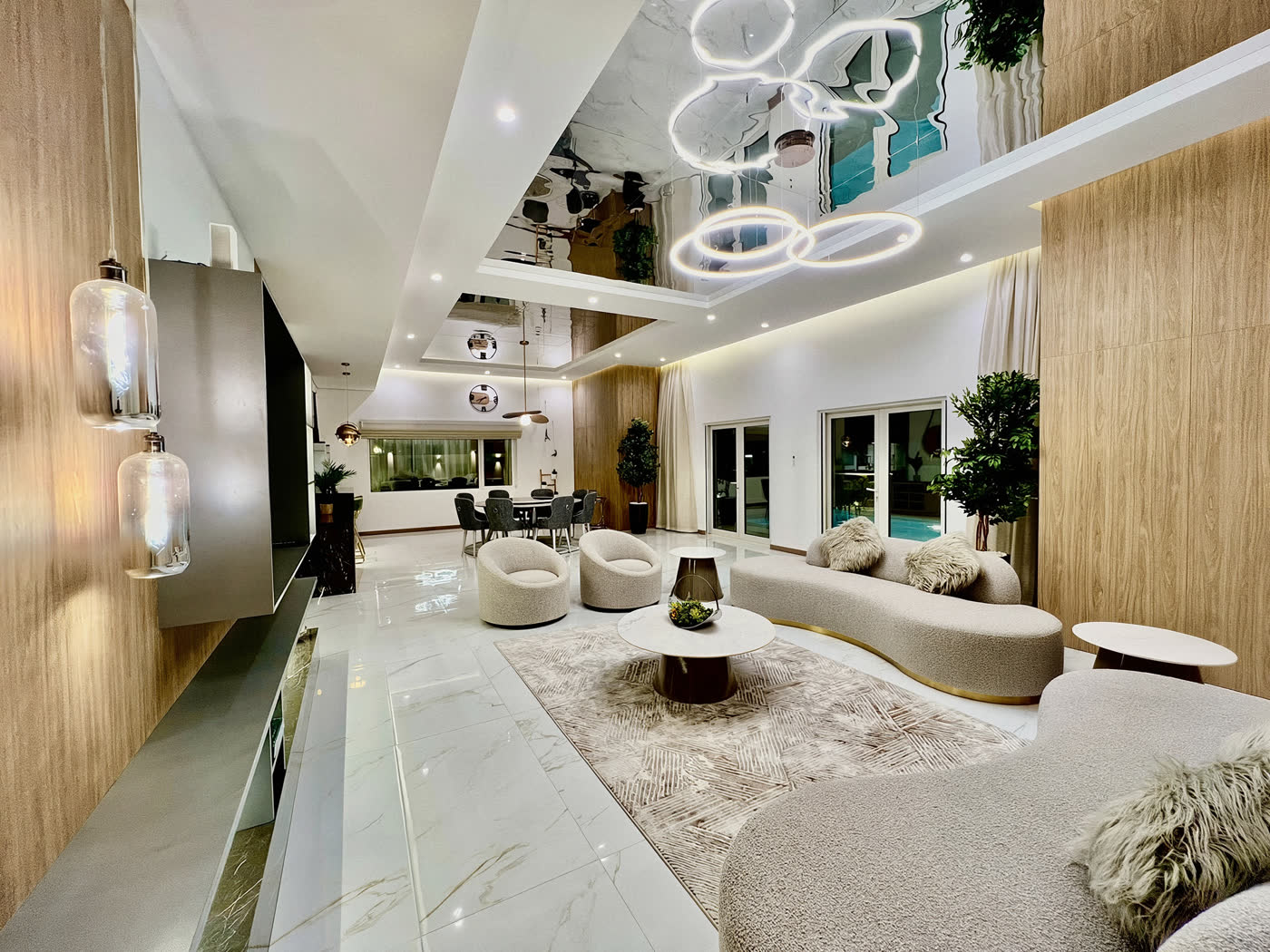
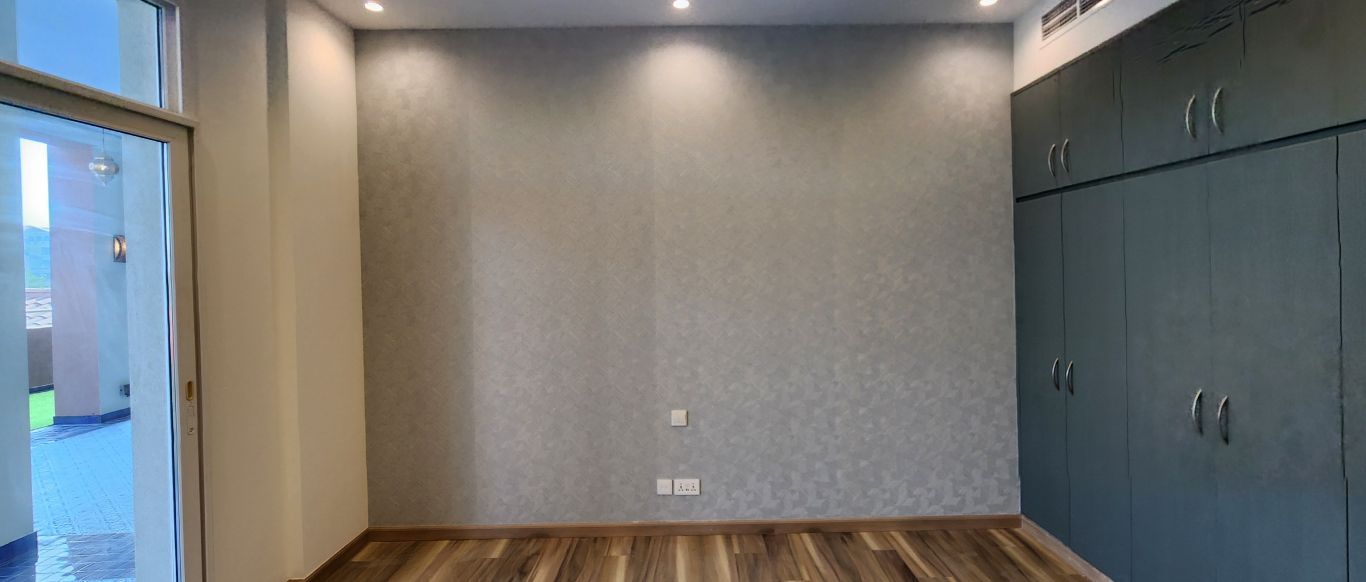
Villa flooring in Dubai: marble, porcelain or wood?
A villa floor in Dubai carries sand in from the garden, takes strong sun through large glazing, often sits on a screed that still holds moisture and lives in air conditioning that is switched off whenever the family travels in summer. This comparison sets stone, porcelain, wood and its patterns, laminate, LVT, SPC and epoxy against each room of the house.
Free site visit · Approvals handled by us · Designed in 3D
Start with the room, not the showroom
Many villa flooring decisions in Dubai go wrong the same way: a material is chosen for the whole house from a sample board, and only later does it meet the ground-floor slab, the garden doors and the summer shutdown. Downstairs rooms in Arabian Ranches, The Springs or Jumeirah Park open straight onto a garden or pool, so they see wet feet, grit and humid air whenever a door is left open. Upstairs bedrooms stay cooled and dry, and almost anything works there. Kitchens take water, bathrooms need waterproofing first, and a new screed holds moisture for a long time. Our flooring for Dubai homes page introduces the types, and our living room design ideas show how the floor sets the tone for everything placed on it.
Marble, natural stone and porcelain
Hard floors remain the default downstairs in Dubai villas because they cope with sand, water and heat.
Marble and natural stone
Marble, travertine and limestone are each unique and feel cool and dense underfoot, welcome in a majlis in August. Most stones are porous, though: they can stain from oil near a kitchen, etch under anything acidic and need periodic sealing. Fine sand dulls a polished stone along the walking line from the garden door, so a honed finish wears and grips better.
Porcelain and large-format tile
Porcelain is dense, absorbs very little water, needs no sealing and copes well with sand, pets and daily mopping. Marble-effect slabs give a pale, continuous ground floor with few joints. Large slabs show any dip in the screed, so the base is levelled first and our tile fixing team plans the joints so cuts fall away from doorways.
Wet areas and grip
Bathrooms, laundries and the strip inside a pool door need grip when wet, so matt or anti-slip finishes go on shower and utility floors, laid over waterproofing, because tiles and grout are not waterproof on their own.
The step outside
Where the living room runs out to a terrace, the indoor tile and the outdoor paving are often the same colour, smooth inside and textured outside, with a level threshold planned before either floor is laid. Outdoor-rated porcelain, stone and composite boards are covered in our outdoor flooring ideas.
Real wood in a Dubai villa
Solid, engineered and the patterns
Real timber brings warmth, quiet and a texture no print copies. Wood swells in humid air and shrinks in dry air, and in a Dubai villa the air is dry for most of the year under air conditioning, then humid for weeks if the AC is switched off during a summer trip, and that swing can open gaps or cup boards. Solid boards, hardwood through their full thickness, move the most and reward owners who keep rooms cooled all year; they can be sanded and refinished again and again. Engineered boards put a real wood surface on a cross-laid core that resists movement and can often float over existing tiles, which makes them the practical route to genuine wood in most villas here. Our wooden flooring in Dubai page compares solid with engineered, and engineered wood flooring covers the installation methods.
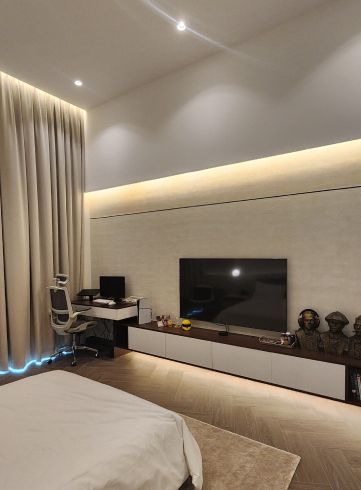
Pattern is the other decision. Herringbone sets rectangular blocks at right angles in a zigzag that draws the eye down a corridor or a long living room, and it is among the less forgiving floors to lay: it needs a true centre line, a flat base and more cutting waste than planks. Chevron, basket weave and panels follow, and all come in solid wood, engineered wood, LVT, SPC and laminate, so the look can go into a kitchen in a material that tolerates water. Our herringbone floor set-out page covers centre lines and borders. Strong sun through south- and west-facing glass changes the colour of most timbers, so blinds are part of owning wood in Dubai.
Laminate, LVT, SPC and resin floors
These floors renew a villa quickly, often over the existing tiles, and they behave very differently in heat and water.
Laminate
A printed wood or stone image on a fibreboard core under a hard wear layer, clicked together as a floating floor. It suits dry, air-conditioned bedrooms; its weak point is water: the core swells if moisture reaches the joints, so it stays out of wet rooms and away from the kitchen sink, with a tiled threshold where sand and wet feet come in from the garden. Our laminate flooring page covers wear classes and underlays.
LVT
Flexible vinyl in separate planks and tiles, usually glued to a smoothed screed. It is quiet, soft to stand on and water-resistant. Being thin, it shows whatever is beneath it, so old grout lines are filled first, and strong sun makes vinyl expand, so adhesive and layout are chosen with the glazing in mind. See our LVT flooring page.
SPC
A rigid plank with a core made largely of stone powder bound with PVC, clicked together without glue. Humidity barely affects it, so a villa closed up in summer is less of a worry than with wood, and the core does not swell with spills, which suits kitchens and family rooms. The rigid core bridges small dips and grout lines, so it usually goes straight over sound tiles, though it is harder underfoot and can sound hollow on a poor base. Our SPC flooring page explains what to check.
Epoxy and resin
A resin poured onto prepared concrete that cures into a seamless surface. In a villa it is usually the garage floor, resisting oil, tyre marks and cleaning chemicals. Moisture rising through a slab pushes the coating off, so the slab is tested and ground first, sunlit areas need a UV-stable finish because many epoxies yellow, and grip is added where water is expected. Our epoxy flooring page sets out the systems.
Room by room
A villa can carry several floors without looking patchy if the changes happen at doorways and the levels meet cleanly.
- Living room and majlisDownstairs, with garden doors and the most sand, pale honed porcelain or stone keeps the room cool and takes the traffic. Where warmth is wanted, engineered wood or a herringbone in wood or LVT suits a villa that stays cooled. Low majlis seating leaves the floor on show, so a pattern or border earns its place.
- Bedrooms and studiesClosed, dry and air-conditioned, so almost anything works: solid or engineered wood for quiet and warmth, laminate for a modest refresh, or the downstairs tile carried up for a cooler feel.
- KitchenWater, grease near the hob and heavy mopping rule out laminate and make solid wood a labour of love. Porcelain and SPC are the practical choices, LVT is softer for standing, and engineered wood works with care if the kitchen runs on from a wooden living room. Our kitchen flooring page covers plinth heights and our kitchen design ideas show the floor with the cabinets.
- Bathrooms and laundriesTile, stone or microcement over proper waterproofing, with a textured shower floor and falls to the drain. Humidity lingers in a bathroom whenever the AC is off, so wood, laminate and click vinyl stay out, however water-resistant the plank.
- Stairs and landingsWood-look treads with matching skirting, or stone or porcelain treads with a defined nosing both work, provided the step edge reads at night and does not polish into a slip hazard under sandy feet. A floor laid over old tiles changes the level at the first and last step, so nosings are planned with it.
- Rooms that open to the garden or poolSand, wet feet and humid air at an open door are hard on every soft floor. A hard-wearing, water-resistant surface, a level threshold to the paving and a generous mat inside the door do more than any product. Where wood is wanted here, a tiled threshold band takes the first steps in.
What sits under the floor decides more than the finish
Screed, moisture, levels and gaps
Most flooring problems in Dubai villas start underneath: boards that cup, joints that lift or a hollow sound under a tile. Before anything is laid the base is checked for flatness, because large slabs, herringbone blocks and floating planks all show dips a small tile would hide; for soundness, with no loose or hollow tiles where a new floor goes over the old; and for dryness, because a fresh screed holds moisture for weeks and a ground-bearing slab can draw it from below, so readings are taken for wood, laminate and vinyl alike and a moisture barrier goes in where needed. At Project Majestic in Al Twar a white marble effect was achieved through careful tiling, and that kind of continuity depends on a base levelled before the first slab is set.
Wood and laminate settle in the room to its temperature and humidity before laying. Every timber or floating floor leaves an expansion gap at the walls and fixed joinery, hidden by the skirting, and a large sunny room may need expansion breaks. A new floor over existing tiles raises the level, so doors may need trimming and thresholds to tiled rooms are planned so the levels meet. We check level and moisture at the site visit, show the chosen floor in 3D in your own rooms before anything is ordered, and apply for any approvals the building or community requires.
What decides between them
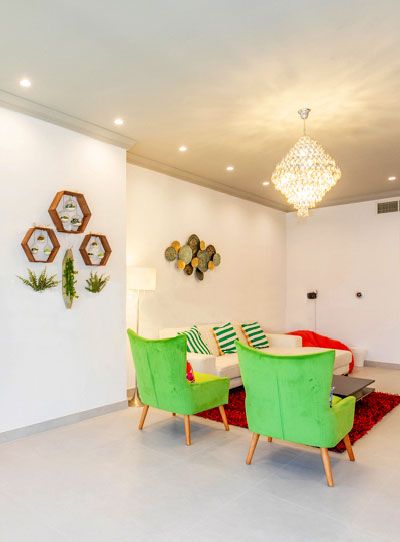
A few questions settle most villa floors. Budget, in bands rather than figures: laminate and SPC broadly sit in the lower band, porcelain and LVT in the middle, engineered wood and large slabs above them, and solid wood, patterned parquet and natural stone highest. Lifestyle: a family with a pool, small children and a dog needs a floor that forgives wet feet, claws and dropped toys, which points to porcelain or SPC downstairs. AC habits: a villa cooled all year suits solid wood; a villa closed up every summer is safer with engineered wood, SPC or tile. Resale: in Dubai's villa communities a continuous pale hard floor through the ground floor reads as well cared for to a buyer or tenant. Check too whether the developer or community management requires a no-objection certificate before work starts.
Floors in our projects
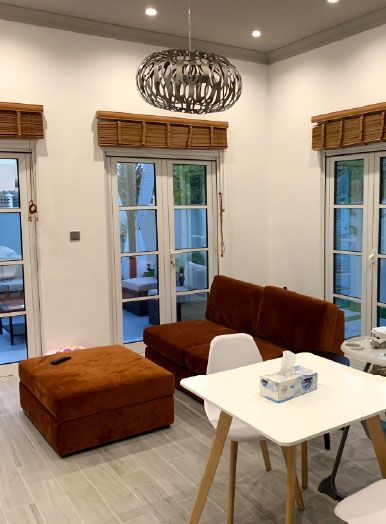
Project Jewel
The Villa, Dubai · 750 sqm · February 2020 - July 2020A sitting area with wood-look plank floor tiles, a rust-brown sofa and white-framed French doors, part of a home makeover in The Villa that included a new kitchen, lighting, furniture, remodelled bathrooms, glasswork, wood flooring and SMART home elements.
View project →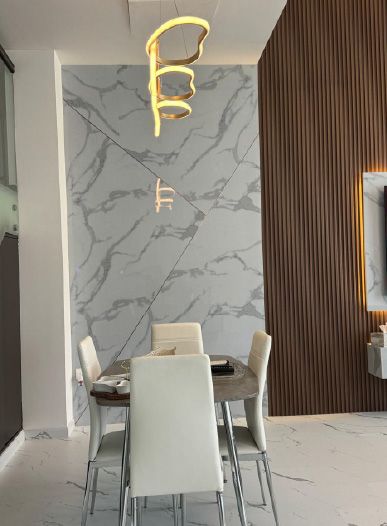
Project Murano
Al Furjan, Jebel Ali · 210 sqm · April 2024 - May 2024A dining corner on a veined white floor, with a sculptural pendant over a small table with white upholstered chairs and a tall veined white wall behind, from indoor and outdoor works in Al Furjan that covered flooring, joinery, and refurbished bathrooms, kitchen, doors and cupboards.
View project →More of our work: YouTube · Instagram · our Google reviews
Questions and answers
Which flooring suits a Dubai villa?
Marble or porcelain for the ground floor?
Will a wooden floor warp in Dubai's climate?
What is the difference between LVT, SPC and laminate?
Can a new floor go over my existing tiles?
Do I need approval to change the floors in my villa?
More guides
Our related services
Contact Us
Ready to bring
your vision to life?
Get in Touch
We appreciate your interest in OutMazed ® Design and would be delighted to assist you with your design requirements. Our team of professionals are committed to providing you with the highest standard of service and satisfaction possible.
Please feel free to contact us and let us know what you're interested in or looking for. We are here to assist you whether you need help with a new project, renovation, or just some design advice. Fill out the contact form below, and one of our staff will contact you as soon as possible.
Alternatively, you can also reach us via phone or email, and our friendly staff will be happy to help you. We encourage you to take the first step towards transforming your space with OutMazed ® Design by contacting us today.