Waterproofing for Dubai villas
Waterproofing is invisible once the tiles are down and expensive to redo once it fails. We plan and apply it as part of renovations, pools and outdoor works, where water meets the structure.
Free site visit · Done before finishes · One project manager
Where water gets into a Dubai villa
Dubai has little rain, so waterproofing is easy to underestimate. Most leaks in villas do not come from the sky in any case. They come from bathrooms and kitchens where water sits on floors and splashes walls every day, from roof terraces and balconies when the occasional heavy downpour arrives and finds a blocked drain, from pools and water features that hold water permanently, and from planters, irrigation and AC drains that keep soil and slabs damp. Strong heat makes it harder: roofs and terraces expand and contract every day, and a membrane that cannot move with the slab will crack. The signs are familiar: stains on the ceiling under a bathroom, blistering paint, loose tiles, salts on walls near planters, and water loss in a pool.
Areas we waterproof
Bathrooms and wet areas
Floors, shower walls and upstands treated before tiling, with careful detailing at drains, corners and pipe penetrations, which is where most failures start.
Kitchens and laundries
Floors and the zones around sinks and appliances, especially on upper floors where a leak shows up in the ceiling below.
Roofs, terraces and balconies
Flat roofs and terraces with the fall, drains and upstands they need, so water leaves the surface rather than sitting on it.
Swimming pools and water features
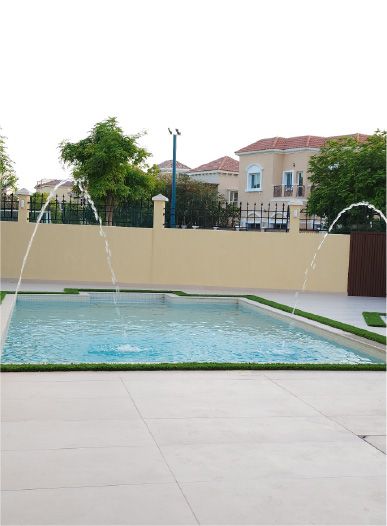
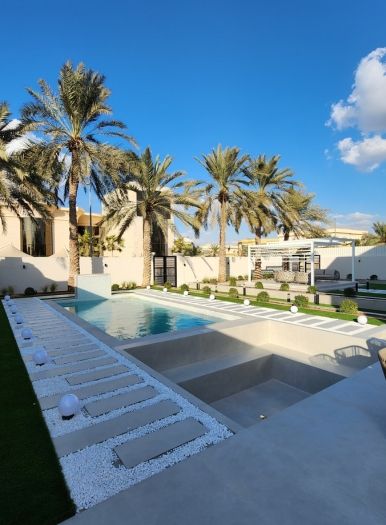
Pool shells, balance tanks, fountains and water walls treated before tiling or other finishes, as part of building or renovating them.
Planters and garden structures
Built-in planters against walls or over slabs lined so irrigation water does not soak into the masonry or the room next to it.
Below-ground and foundations
Basements, foundations and walls in contact with soil, where ground moisture and irrigation can rise into the structure.
Common waterproofing systems, in general terms
Each system has its place. The right one depends on the surface, the movement it sees, whether it is exposed to sun and what finish goes on top. It is chosen during the Plan stage.
- Cementitious coatingsBrush- or trowel-applied coatings that bond well to concrete and masonry; often used in pools, tanks and wet areas under tiles.
- Liquid-applied membranesCoatings that cure into a seamless flexible layer, easy to detail around drains and pipes.
- Sheet membranesRolled membranes bonded or torched onto roofs and below-ground surfaces, with lapped joints.
- Polyurethane and similar coatingsFlexible coatings used on roofs and terraces where movement and sun exposure are significant.
- Crystalline treatmentsProducts that react within concrete to block water paths, used on some structural elements.
Why it is planned with the rest of the work
Falls, drains and the order of trades
Most waterproofing failures are not a material problem but a detailing or sequencing one. A membrane is laid without enough fall to the drain, so water sits on it. A plumber drills through it after it is finished. A tiler fixes a shower screen through the upstand. The drain itself is not sealed into the membrane. These are avoided by drawing the falls, drains and penetrations in the design and by keeping the waterproofing in the hands of the same team that does the plumbing and tiling.
Waterproofing is also tested before it is covered. Wet areas and pools are typically flood- or fill-tested so a leak shows up while it is still cheap to fix, not after the tiles, ceiling below or pool finish are in place.
How we handle waterproofing
Project Study
A free site visit to see the area, trace signs of existing leaks and understand what lies above, below and behind it.
Plan
We decide the system for each area, the falls and drain positions, and how the waterproofing ties into plumbing, tiling and joinery.
Visualization
For renovations, finished bathrooms, terraces and pools are shown in 3D, including drain and threshold positions that affect the waterproofing.
Execution
Our in-house team prepares the surface, applies the waterproofing and checks it before anything covers it, then completes the finishes, coordinated by one project manager.
What changes the cost
- Area and number of surfaces
- Removal of existing finishesTiles, screed or old membranes that have to come off first.
- Surface conditionRepairs to cracked or uneven slabs before waterproofing.
- System chosenDepends on exposure, movement and the finish on top.
- Falls and drainsRe-screeding to correct falls or moving drains.
- ReinstatementNew tiles, pool finish or ceiling repairs once the waterproofing is done. Where the waterproofing is part of a bigger job, it is planned with the wider civil works, such as an extension or MEP.
Questions and answers
Why do I need waterproofing if it hardly rains in Dubai?
There is a stain on the ceiling under my bathroom. What does that mean?
Can you waterproof without removing the tiles?
Do you waterproof swimming pools?
Should waterproofing be tested?
How long does waterproofing take?
Can waterproofing be part of a bigger renovation?
Guides and ideas
Related services
Contact Us
Ready to bring
your vision to life?
Get in Touch
We appreciate your interest in OutMazed ® Design and would be delighted to assist you with your design requirements. Our team of professionals are committed to providing you with the highest standard of service and satisfaction possible.
Please feel free to contact us and let us know what you're interested in or looking for. We are here to assist you whether you need help with a new project, renovation, or just some design advice. Fill out the contact form below, and one of our staff will contact you as soon as possible.
Alternatively, you can also reach us via phone or email, and our friendly staff will be happy to help you. We encourage you to take the first step towards transforming your space with OutMazed ® Design by contacting us today.